Table of Contents
For most light-duty electronics repair tasks, an electric precision screwdriver with adjustable torque around 0.05–0.40 N·m offers a useful operating range. Lower settings provide greater control for delicate fasteners, while higher settings provide additional turning force when needed.
However, no single torque setting works for every device. The correct torque depends on screw size, thread material, fastening location, and the equipment manufacturer's specifications. For tool brands and distributors, understanding these differences helps when comparing electric screwdriver models and planning product ranges.
Torque is the rotational force applied by a screwdriver, measured in Newton-meters (N·m). Electric precision screwdrivers generally operate at much lower torque levels than general-purpose power screwdrivers because they are designed for small fasteners.
Too much torque can damage screw heads, strip threads, or crack plastic mounting points. Too little torque may prevent proper fastening or make screw removal difficult.
Three specifications should be distinguished:
-- Electric Torque: The turning force generated during powered operation.
-- Manual Torque: The torque the screwdriver mechanism can withstand when operated manually.
-- Tightening Torque: The specified fastening torque for a particular screw, usually determined by the equipment manufacturer.
These values are not interchangeable. A screwdriver rated for 5 N·m of manual torque does not mean 5 N·m is suitable for tightening electronics screws.
Different electronics use screws with different dimensions, materials, and fastening requirements. The table below shows how common electric torque ranges can be considered during tool selection.
Electric Torque Range |
Typical Selection Considerations |
0.04–0.10 N·m |
Low-force operation where delicate fastening and controlled movement are priorities |
0.10–0.20 N·m |
General precision work involving small electronic components |
0.20–0.30 N·m |
Fasteners requiring moderately higher turning force |
0.30–0.40 N·m |
Higher-resistance tasks within the screwdriver's rated capacity |
These are tool-selection considerations, not approved tightening specifications for particular devices. Always follow the equipment manufacturer's requirements.
Smartphones and tablets contain small screws, compact brackets, and delicate internal components. Lower electric torque settings can help reduce excessive force during repeated fastening operations. Correct bit fit is equally important: even a low-torque screwdriver can damage a screw if the bit profile or size is incorrect.
Laptop maintenance involves screws securing bottom covers, SSD brackets, cooling components, and other internal assemblies. An adjustable electric screwdriver offers flexibility across different fasteners, but final tightening should follow the laptop manufacturer's service specifications.
Cameras, drones, and compact electronics often combine metal fasteners with plastic housings or lightweight structural components. These applications benefit from controlled torque and accurate bits. Adjustable torque can provide broader application coverage for multi-device repair tool ranges.
Both fixed-torque and adjustable-torque electric screwdrivers have suitable applications. The better choice depends on the intended product positioning and range of repair tasks.
Feature |
Fixed Torque |
Adjustable Torque |
Operation |
One preset output |
Multiple selectable settings |
Main Advantage |
Simple operation |
Greater flexibility |
Typical Positioning |
Focused precision tasks |
Multi-device repair applications |
Product Differentiation |
Compact design and ease of use |
Torque control and broader functionality |
Best Fit |
Basic tool configurations |
Multi-purpose repair tool sets |
A fixed-torque screwdriver may be sufficient for a narrow range of tasks. Adjustable models are more versatile when the same tool is intended for smartphones, laptops, cameras, and other devices.
Selectable motor torque does not necessarily provide calibrated fastening accuracy. Applications requiring precise final tightening values may need a dedicated calibrated torque screwdriver.
Some screws require more force to loosen than a compact electric motor can provide. Thread-locking compounds, corrosion, or previous overtightening may increase the force required for removal.
A screwdriver designed for electric and manual operation allows the operator to loosen a resistant screw manually before using the electric function to remove it. Manual operation can also assist with final fastening when the required tightening torque is respected.
Manual torque capacity describes the tool's mechanical capability, not the recommended tightening force for a device.
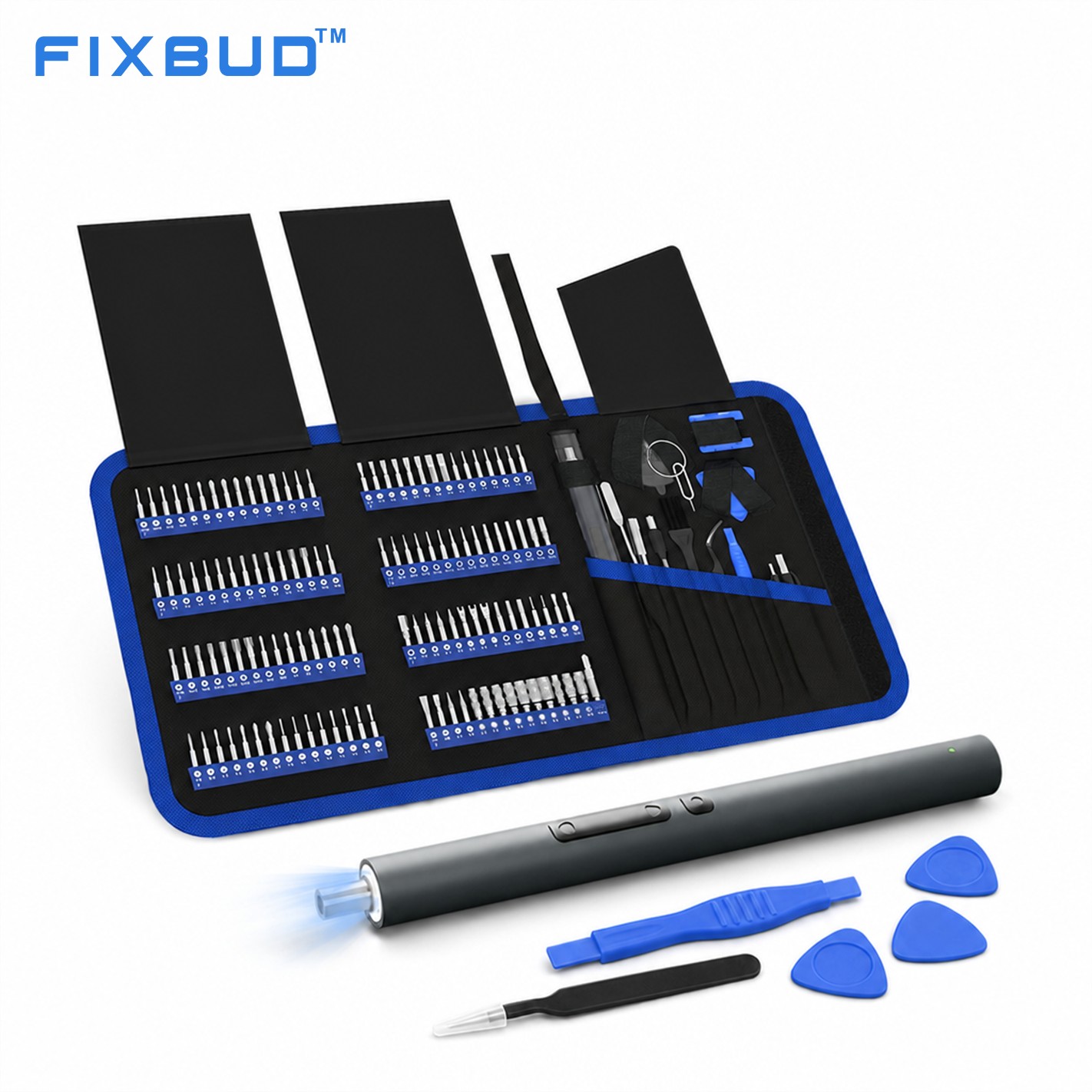
FIXBUD manufactures electric precision screwdriver sets with different torque configurations, bit selections, and accessories for electronics repair, private-label product development, and wholesale supply.
FIXBUD Model |
Electric Torque |
Manual Torque |
Configuration |
0.05 / 0.10 / 0.20 / 0.30 / 0.40 N·m |
Up to 5 N·m |
64 S2 bits; five settings |
|
0.05 / 0.10 / 0.20 / 0.30 / 0.40 N·m |
Up to 5 N·m |
30 S2 bits; five settings, compact repair accessories |
|
0.04 / 0.10 N·m |
Up to 5 N·m |
120 CR-V bits; two settings |
The 66-in-1 provides five selectable torque levels for applications requiring more adjustment options. The 38-in-1 offers a compact kit, while the 137-in-1 combines lower electric torque settings with a larger bit and accessory selection.
Electric Precision Screwdriver Sets
These differences allow brands and distributors to compare products by intended application, price positioning, bit coverage, and product-line requirements.
Maximum torque is only one specification to compare. Before selecting an electric precision screwdriver for wholesale or private-label supply, consider the following factors.
-- Torque Adjustment: Number of settings and ease of switching between them.
-- Torque Consistency: How performance is tested and controlled across production batches.
-- Bit Accuracy: Bit material, tip dimensions, fit, and compatibility.
-- Motor and Gearbox: Operating speed, transmission design, and performance under load.
-- Battery and Charging: Battery capacity, charging protection, and relevant documentation.
-- Kit Configuration: Whether opening tools, extensions, or additional bits are included.
-- OEM/ODM Options: Logo, packaging, instructions, and available configuration changes.
Request samples and test them against intended applications before confirming a bulk order.
A maximum electric torque of 0.4 N·m can cover many light-duty precision fastening tasks. Some screws require more or less torque, so equipment specifications take priority.
No. Higher torque provides more turning force but can increase the risk of damaging delicate fasteners. Adjustable control is often more useful than maximum torque alone.
Yes, within its rated capability. A suitable manual operating function may help loosen screws requiring greater breakaway force.
It can help reduce excessive force, but correct bit fit, screw alignment, and proper fastening technique remain essential.
Yes. FIXBUD supports OEM/ODM projects including logo, packaging, instructions, and selected configuration options. Technical requirements should be confirmed during sampling.
The best torque for an electric precision screwdriver depends on the fastening application, not simply the highest available output.
For general electronics repair, an adjustable range around 0.05–0.40 N·m provides flexibility across many light-duty tasks. Brands and distributors should also evaluate bit accuracy, motor performance, accessory configuration, and quality consistency.
FIXBUD manufactures precision electric screwdriver sets for OEM/ODM, private-label, and wholesale supply. Share your target applications, product specifications, and estimated order quantity to discuss suitable configurations and sampling options.
Compare torque settings, bit configurations, packaging, and OEM/ODM options for your next screwdriver product line.
Discuss Your Electric Screwdriver Project → Hot News
2026-11-06
2026-11-05
2026-11-06
2026-11-05
2026-11-04
2026-11-04

FIXBUD manufactures precision screwdriver sets, bits and repair tools in China. OEM/ODM, private-label and bulk supply worldwide. Request a custom quote today.
Room 402, Building B, Getailong Zhigu, Bulong Road, Bantian Street, Longgang District, Shenzhen, Guangdong Province, China
Copyright © 2026 EWIN ENTERPRISE LTD. All rights reserved. Privacy Policy
 EN