Table of Contents
Compact electronics repair tool kits are better for focused repairs, portability, and smaller packaging. Large kits offer broader bit coverage and more accessories, making them suitable for multi-device maintenance.
The right choice depends on repair applications, tool configuration, packaging costs, and market positioning—not simply the number of pieces.
This guide compares both options and explains how to select or customize repair kits for different markets.
The main difference is repair coverage, not just kit size.
Comparison |
Compact Repair Tool Kits |
Large Repair Tool Kits |
|---|---|---|
Repair Coverage |
Focused repair tasks or selected devices |
Multiple devices and broader maintenance tasks |
Bit Selection |
Essential or application-specific bits |
Wider range of bit types and sizes |
Accessories |
Selected opening or handling tools |
More opening, extension, and handling tools |
Portability |
Easier to carry and store |
Requires more storage space |
Packaging |
Pen-style storage, compact cases |
Organized cases, multi-layer boxes, tool bags |
Product Position |
Portable or application-specific SKU |
Comprehensive or multi-device SKU |
Cost Structure |
Fewer components in many configurations |
More components and potentially greater packaging costs |
A 100-piece kit may contain unnecessary bits, while a smaller kit with the correct tools can complete the same repair.
Likewise, compact electric kits may cost more than large manual sets because of their motors, batteries, and electronic components.
The key difference:
Compact kits prioritize specific tasks and portability. Large kits provide wider tool coverage. Neither size automatically guarantees better quality or value.
The most practical way to choose a repair kit is to identify the devices and maintenance tasks it needs to support.
Phone and tablet repairs often require precision bits and opening accessories.
For example, some smartphone screen replacements require P2 Pentalobe and Tri-point Y000 drivers, alongside opening picks, suction tools, and tweezers.
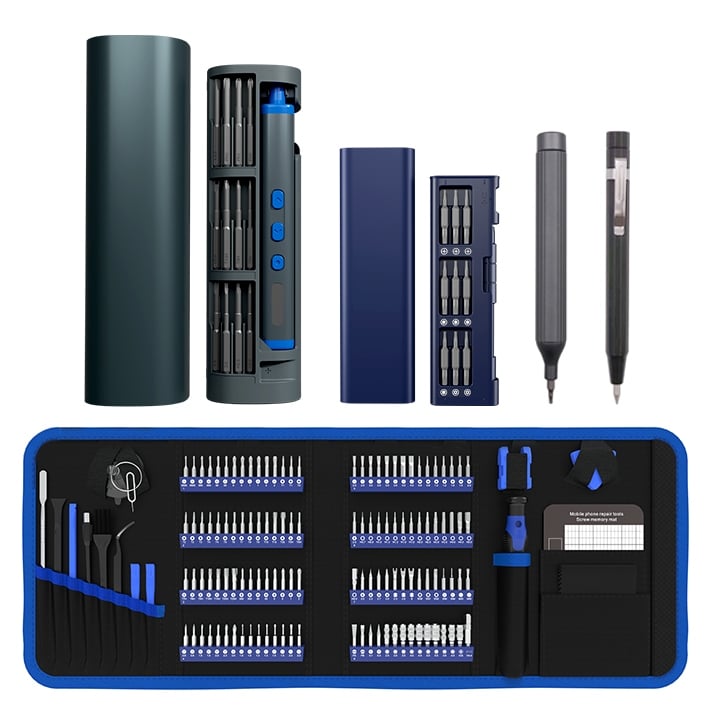
A compact configuration may include:
Larger kits suit repairs across different phone and tablet models requiring more screw profiles and opening tools.
Selection advice:
A screwdriver-only set should not be marketed as a complete phone repair kit if the intended repairs also require opening tools, heating, or adhesive replacement.
Laptop repair requirements vary considerably by brand, model, and repair task.
Some RAM or SSD upgrades only require a small number of screwdrivers. Other repairs involve removing bottom covers, internal brackets, fans, batteries, and delicate connectors.
Repair Task |
Tools to Consider |
Suitable Kit Direction |
|---|---|---|
RAM or SSD Upgrade |
Compatible Phillips, Torx, or other specified bits |
Focused compact kit |
Bottom Cover Removal |
Precision bits, opening tools |
Compact kit with opening accessories |
Fan and Internal Maintenance |
Bits, tweezers, extensions, opening tools |
Medium or larger kit |
Multi-Brand Laptop Repair |
Broader bit profiles and repair accessories |
Large repair kit |
For example, some laptop models require Pentalobe screws for the bottom case and Torx or Torx Plus screws internally. Standard laptop models may use more conventional Phillips fasteners.
A kit designed specifically for basic laptop upgrades does not necessarily need 100 bits. However, a product intended for broader laptop servicing should cover more fastener types and include suitable opening tools.
Game console repair provides a useful example of why tool compatibility matters more than kit size.
For example, published repair guidance for a popular game console identifies:
Standard Torx and Security Torx bits are not always interchangeable.
A dedicated console repair kit may need only selected bits and opening accessories. Multi-console repair kits require broader coverage.
FIXBUD provides game console repair tool kit solutions that can be configured around specific repair requirements.
A larger electronics repair kit becomes more useful when repairs involve phones, tablets, laptops, gaming consoles, and other small electronic devices.
Such configurations may benefit from:
These configurations reduce the need to switch between separate tool sets. However, compatibility still depends on specific bit types, sizes, and working lengths.
Application takeaway:
Select compact kits for defined repair tasks and larger kits for broader device coverage.
A useful repair kit contains the tools needed for its intended applications, not simply the highest piece count.
Before finalizing a bit assortment, check:
Bit material and accuracy also matter. S2 and CRV steel are common options, but steel grade alone does not determine performance. Fit accuracy, hardness, heat treatment, and durability should also be evaluated. Read S2 Steel vs. CR-V Bits to learn more.
Accessory |
Function |
Suitable Applications |
|---|---|---|
Opening Picks |
Help separate suitable housings |
Phones, tablets, selected laptops |
Plastic Spudgers |
Assist with delicate opening tasks |
Electronic housings and connectors |
Tweezers |
Handle small components |
Internal electronics maintenance |
Magnetic Screw Mat |
Keep removed screws organized |
Multi-step disassembly |
Extension Shaft |
Reach recessed fasteners |
Selected laptops and other electronics |
Suction Cup |
Help lift suitable panels |
Compatible phones and tablets |
Only include accessories relevant to the intended repair process. Unnecessary tools increase costs and packaging size without adding practical value.
Manual screwdrivers provide direct control without charging. Electric models support repeated fastening tasks but require appropriate torque settings.
For example, FIXBUD's 38-in-1 electric repair set includes 30 S2 bits, opening picks, a magnetic mat, and an electric screwdriver with a specified 0.05–0.40 N·m torque adjustment range.
This shows how compact kits can combine electric operation with selected repair accessories.
When selecting electric models, check torque, battery performance, charging requirements, and manual operation capability.
Configuration advice:
Prioritize compatible bits, practical accessories, and reliable performance over total piece count.
Packaging affects transportation, storage, product presentation, and final costs.
Large kits often require bigger cases, but shipping costs depend on actual packaging dimensions and weight.
Request the following information:
Two similarly priced kits may have different landed costs because of packaging size and transportation requirements.
Pen-style storage: Compact and portable, suitable for selected precision bits.
Compact hard cases: Organized storage with clear product presentation.
Multi-layer cases: Suitable for more bits and repair accessories.
Tool bags: Practical for larger configurations requiring additional storage.
Packaging should secure the components, protect them during transportation, and fit the intended sales channel.
Cost Factor |
What to Check |
|---|---|
Components |
Bits, handles, accessories, materials |
Packaging |
Cases, inserts, labels |
Transportation |
Weight, carton size, freight |
Branding |
Logos, colors, instructions |
Inventory |
Storage, order quantities |
Quality |
Inspection and replacement requirements |
A larger kit may justify a higher selling price, but its added tools must provide meaningful value. Compact premium kits can also have higher unit costs than basic large sets.
Cost takeaway:
Compare complete landed costs against target selling prices, rather than relying only on factory quotations.
Different sales channels have different requirements for configuration, packaging, and product positioning.
Compact kits can emphasize portability, selected applications, and organized storage.
Larger kits can highlight broader tool coverage and multi-device compatibility.
Product listings should clearly display bit specifications, accessories, dimensions, and intended uses. Packaging size, fulfillment fees, and compatibility-related returns also need consideration.
Evaluate what is missing from the existing product range.
If large manual sets are already available, a compact precision kit may provide a new option.
If the range focuses on small screwdriver sets, a comprehensive repair kit can expand application coverage.
Electric models can introduce another product level without simply adding more bits.
Important considerations include:
Compact kits may suit electronics accessory displays, while larger kits may fit dedicated tool sections.
Market Requirement |
Recommended Direction |
Reason |
|---|---|---|
Portable precision tools |
Compact kit |
Easy storage |
Device-specific repair |
Compact or medium kit |
Relevant configuration |
Multi-device maintenance |
Large kit |
Wider tool coverage |
Premium portable tools |
Compact premium kit |
Design and materials |
Complete repair product range |
Both sizes |
Different customer needs |
Market takeaway:
Select configurations that fill a clear product need rather than adding unnecessary sizes or features.
Offering both sizes makes sense when they serve different applications or price positions.
One configuration may be sufficient when:
A focused kit is often easier to position and evaluate than multiple similar SKUs.
Consider these FIXBUD configurations:
Model |
Configuration |
Position |
|---|---|---|
39-in-1 Pen Screwdriver |
19 double-ended S2 bits, 38 working tips, aluminum handle |
Compact precision fastening |
117-in-1 Manual Repair Kit |
98 CRV bits, 19 accessories |
Broader electronics maintenance |
The 39-in-1 pen screwdriver focuses on portable precision fastening, while the 117-in-1 repair kit provides more tools for varied maintenance tasks.
Product-line takeaway:
Offer both sizes when each SKU has a clear application, price position, and product advantage.
Custom configurations can start from existing products, with adjustments to tools, accessories, packaging, and branding.
Identify the intended devices and repair tasks first.
A laptop upgrade kit requires different tools from a comprehensive phone repair kit. Providing device models helps determine the appropriate bits and accessories.
Customization options may include:
Packaging can also be adapted for e-commerce fulfillment, retail displays, or protective storage.
Evaluate samples for:
Bit accuracy: Proper fit with intended screws.
Material and hardness: Suitable steel specifications and test information.
Handle performance: Grip, bit retention, and torque.
Accessory quality: Reliable function and construction.
Packaging: Secure storage and transportation protection.
Electric models also require checks for torque control, batteries, charging, and relevant documentation.
FIXBUD operates with ISO9001 quality management and BSCI factory certification. Quality inspections cover bit accuracy, torque, appearance, and functionality. Product-specific compliance documents should be confirmed according to the model and destination market.
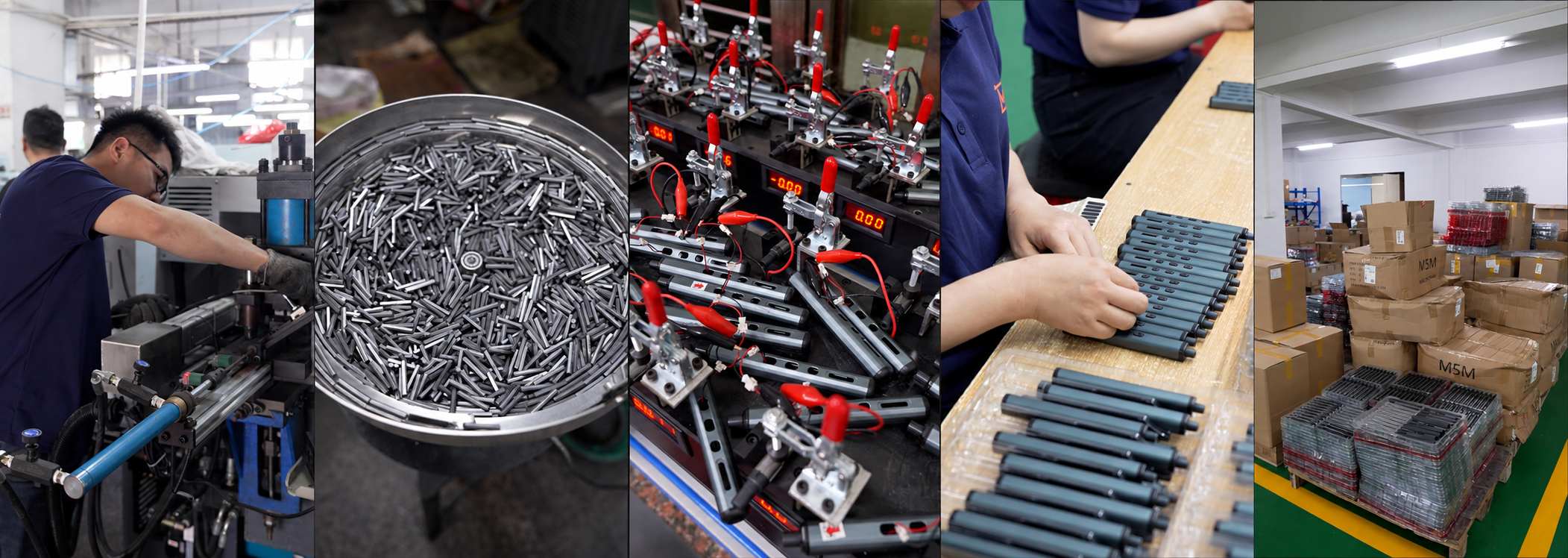
Electronics Repair Tool Kits Manufacturer & Supplier in China
Item |
FIXBUD Reference |
|---|---|
Neutral Product MOQ |
From 100 sets for many models |
Customized MOQ |
Generally 500–1,000 sets |
Samples |
Available for evaluation |
Standard Production |
Typically 15–20 days |
Customized Production |
Typically 35–40 days |
OEM/ODM |
Logo, packaging, instructions, configurations |
Requirements vary by product, order quantity, and customization scope.
Before bulk production, confirm specifications, approved samples, pricing, packaging, and delivery terms.
Sourcing advice:
Define your application and target price first, then verify configuration, quality, and production requirements.
1. Are Large Electronics Repair Tool Kits Better for Professional Use?
Not always. Large kits provide broader coverage, but compact application-specific kits can be better for repetitive tasks. Tool quality and compatibility matter more than piece count.
2. How Many Bits Should a Compact Electronics Repair Kit Include?
There is no fixed number. Some kits contain fewer than 30 bits, while double-ended bits increase working tip coverage without requiring more storage space.
3. Should an Electronics Repair Kit Include Opening Tools?
Yes, if its intended repairs require device disassembly. Opening picks, spudgers, tweezers, or suction tools may be necessary depending on the application.
4. Can Existing Repair Tool Kits Be Customized for Private Labels?
Yes. FIXBUD supports logo, packaging, instructions, and selected configuration changes. Available options and MOQ depend on the project.
5. What Should I Check Before Ordering Repair Tool Kits in Bulk?
Confirm tool compatibility, materials, accessories, packaging dimensions, samples, MOQ, production lead time, and applicable compliance documentation.
Before selecting a compact or large repair kit, check:
The best electronics repair tool kit is not necessarily the smallest or largest. It provides the right tools for its intended applications at a suitable cost and product position.
Whether you need a compact precision screwdriver set or a larger multi-device repair kit, FIXBUD supports OEM/ODM configurations, private-label packaging, and bulk manufacturing.
Share your target applications, preferred configuration, and estimated order quantity to discuss suitable products, samples, customization options, and quotations.
Discuss Your Electronics Repair Tool Kit Project → Hot News
2026-11-10
2026-11-06
2026-11-05
2026-11-06
2026-11-05
2026-11-04

FIXBUD manufactures precision screwdriver sets, bits and repair tools in China. OEM/ODM, private-label and bulk supply worldwide. Request a custom quote today.
Room 402, Building B, Getailong Zhigu, Bulong Road, Bantian Street, Longgang District, Shenzhen, Guangdong Province, China
Copyright © 2026 EWIN ENTERPRISE LTD. All rights reserved. Privacy Policy
 EN