Table of Contents
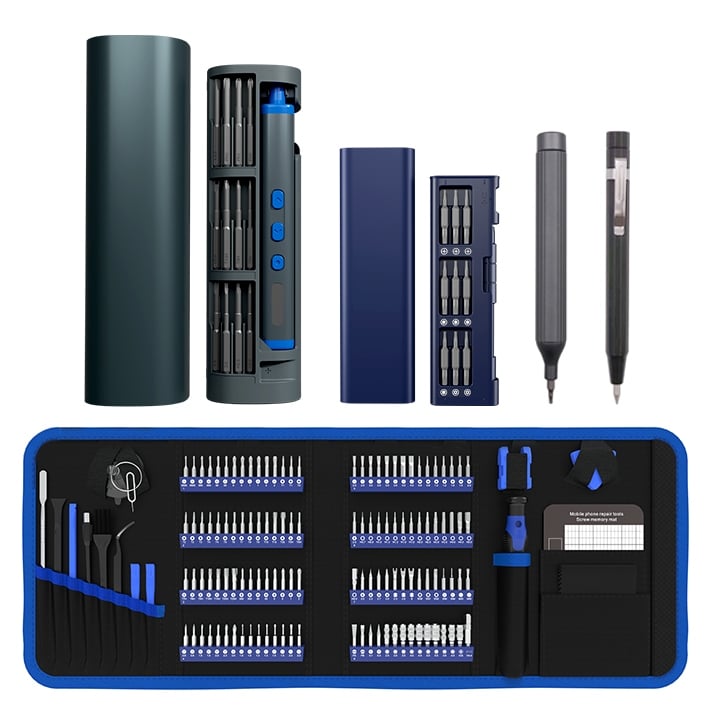
Screwdriver sets for wholesale include general-purpose, precision, ratcheting, electric, and specialty sets. This guide compares their applications, bit types, materials, and key sourcing factors to help you choose the right products for wholesale and private-label sales.
Screwdrivers can be classified by tip shape, operating mechanism, or application. For wholesale sourcing, grouping them by intended market and use is often more practical.
Type |
Common Applications |
Key Features |
Main Sourcing Considerations |
|---|---|---|---|
General-Purpose Screwdriver Sets |
Household repairs, furniture, appliances |
Full-size handles, Phillips and slotted tips |
Durability, comfortable grip, competitive price |
Furniture assembly, hardware maintenance, everyday repairs |
Interchangeable bits, reversible ratchet options |
Ratchet reliability, bit retention, torque capacity |
|
Phones, laptops, cameras, watches, electronics |
Small tips, slim handles, specialty bits |
Tip accuracy, screw compatibility, bit quality |
|
Repetitive electronics assembly and repair |
Motorized operation, torque settings, rechargeable batteries |
Torque control, battery performance, gearbox durability |
|
Compact & Promotional Sets |
Electronics accessories, retail gifts, promotional bundles |
Pen-style or mini handles, portable storage |
Cost, presentation, logo customization |
Specialty Screwdriver Sets |
Electrical work, controlled-torque assembly, security fasteners |
Insulated designs, torque-limiting mechanisms, specialty bits |
Application-specific standards and performance requirements |
These categories can overlap. For example, a precision screwdriver may be manual or electric, while a ratcheting screwdriver may use interchangeable bits similar to a general-purpose set.
The distinction matters because two products with similar bit counts may serve entirely different markets.
Key Takeaway:
Choose screwdriver set categories by application and target market rather than bit count alone.
The operating mechanism affects both the selling price and how the tool performs.
Manual screwdrivers remain suitable for general repairs, precision work, and occasional use. They require no battery, are generally economical to produce, and offer direct control over tightening.
Their simplicity also makes them practical for promotional gifts or tools bundled with electronic accessories.
A compact manual screwdriver supplied with a camera accessory, for example, may only need several correctly sized bits rather than a complete repair toolkit.
Ratcheting screwdrivers allow repeated rotation without constantly lifting and repositioning the driver.
They are useful for furniture assembly, household maintenance, and work involving repeated fastening. Reversible mechanisms and interchangeable bits add flexibility.
When evaluating these products, check the ratchet's engagement, directional switching, bit retention, and durability under load.
Electric screwdrivers reduce repetitive wrist movement and can improve working speed when handling numerous screws.
For delicate electronics, adjustable torque is particularly important. Too much torque can damage small fasteners or threaded components.
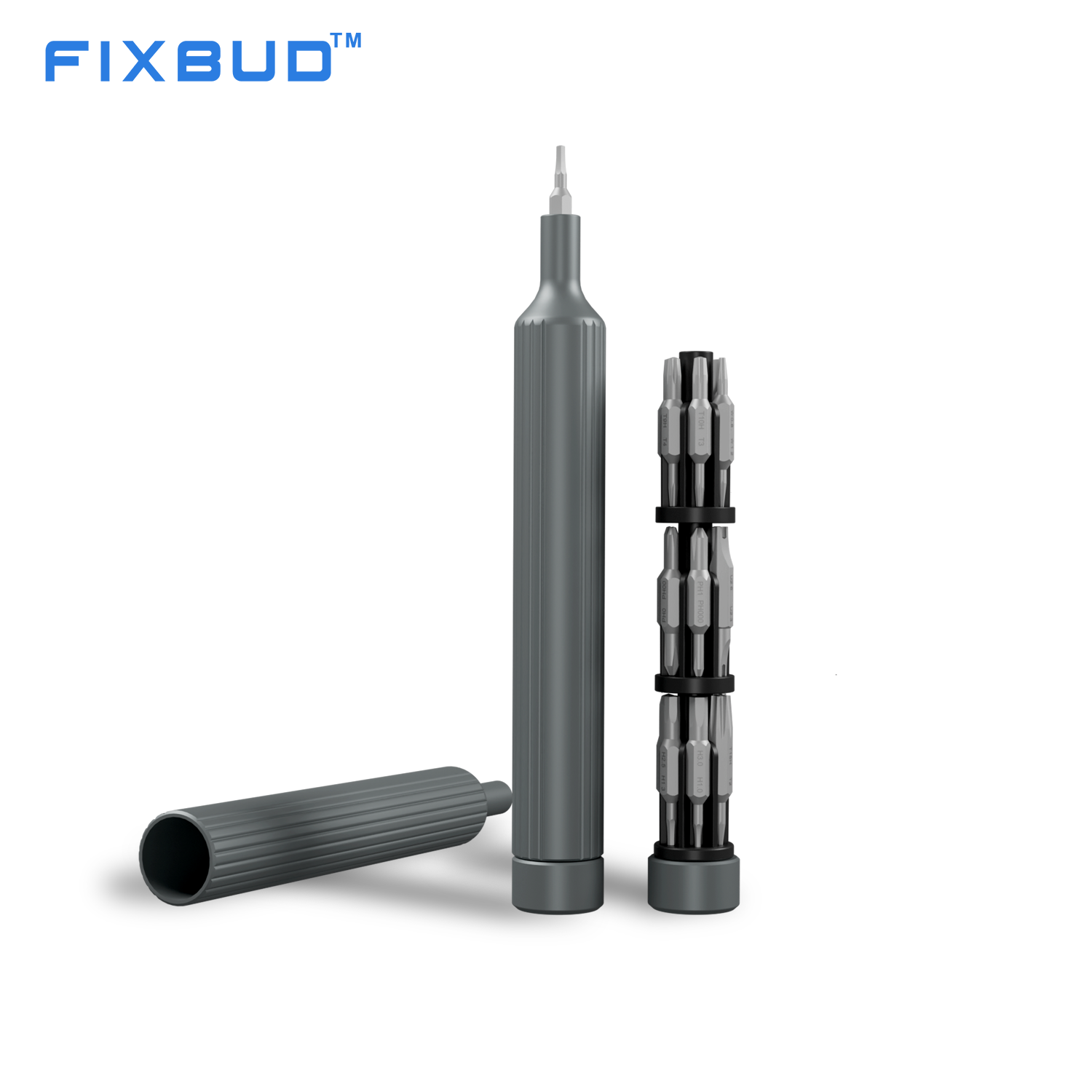
As one product example, FIXBUD's 66-in-1 Electric Precision Screwdriver Set provides five electric torque settings from 0.05 to 0.40 N·m, along with manual operation.
Electric tools also require closer attention to charging safety, battery life, gearbox construction, and after-sales support.
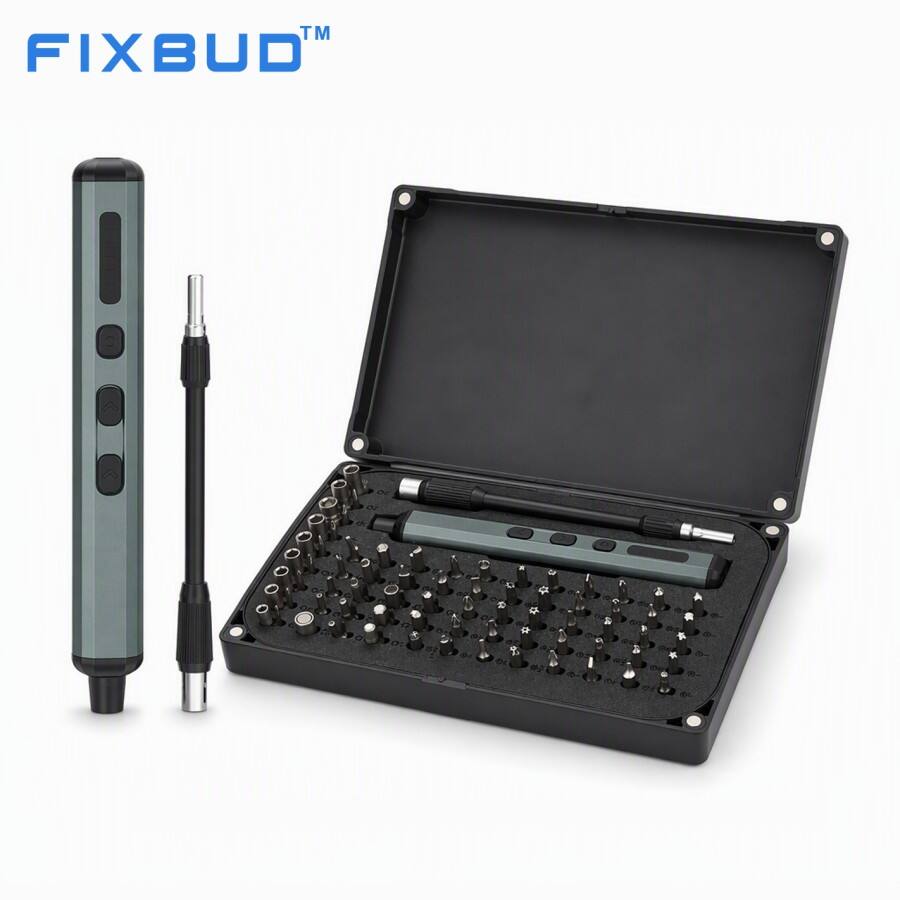 66-in-1 Electric Precision Screwdriver Set for Electronics Repair & Maintenance
Key Takeaway:
Manual tools prioritize simplicity and control, ratcheting tools improve hand-operation efficiency, and electric tools are valuable where repetitive fastening justifies the additional cost.
A screwdriver set is only useful when its screwdriver bits match the screws encountered in the intended application.
Phillips and slotted bits cover many everyday tasks, but electronics repair often requires additional profiles.
Bit Type |
Common Sizes or Examples |
Typical Applications |
|---|---|---|
Phillips (PH) |
PH000, PH00, PH0, PH1, PH2 |
Electronics, appliances, general repairs |
Slotted (SL) |
1.5, 2.0, 3.0 mm |
Household products, electrical terminals, older fasteners |
Torx (T) |
T2–T10, larger sizes as needed |
Laptops, electronics, automotive components |
Security Torx (TR) |
TR6, TR8, TR10 |
Electronics and security fasteners |
Hex (H) |
H1.5, H2.0, H2.5, H3.0 |
Furniture, mechanical components, accessories |
Pentalobe (P) |
P2, P5 |
Selected Apple phones and laptops |
Tri-point (Y) |
Y000, Y00, Y0 |
Selected phones and other compact electronics |
Square (Robertson) |
SQ1, SQ2 |
Woodworking, construction, general hardware |
Pozidriv (PZ) |
PZ1, PZ2 |
Furniture and general fastening applications |
Sizes are examples, not a universal list for every device. Always verify the actual fastener specifications.
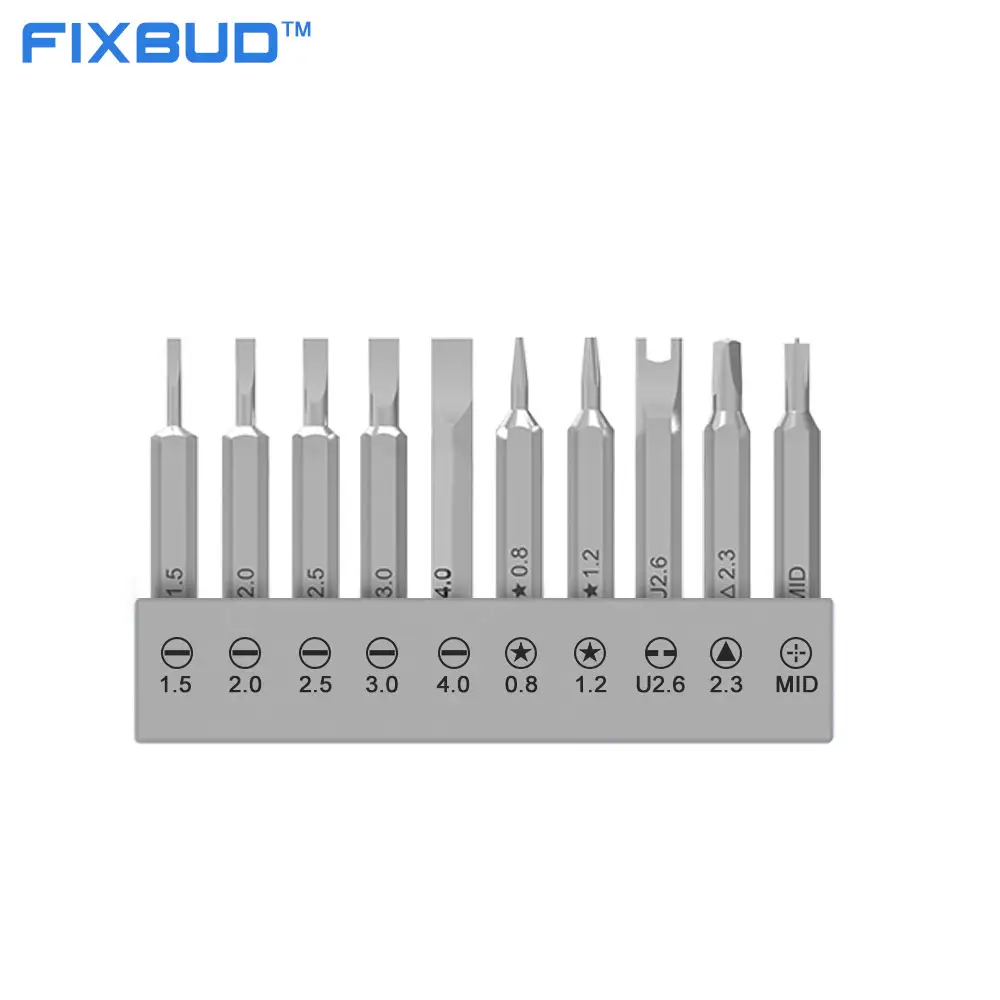
Different Types of Precision Screwdriver Bits
Consider two documented repair applications:
iPhone 15 Pro: Its screen replacement procedure uses a P2 Pentalobe driver for exterior screws and a Y000 Tri-point driver for internal screws.
MacBook Air 2022 (M2): Its battery replacement procedure lists Pentalobe, Torx, and Torx Plus drivers, including P5, T5, T3, and selected Torx Plus sizes.
These examples show why a general-purpose screwdriver kit cannot automatically be marketed as suitable for every electronic device.
They also illustrate the importance of tip dimensions. A bit that looks similar to the required shape may still fit poorly, increasing the risk of damaging the screw head.
For electronic repair sets, opening picks, spudgers, tweezers, and other accessories may be as important as the screwdriver itself.
Key Takeaway:
Build the bit configuration around actual fastener requirements. Accurate profiles and useful accessories matter more than offering the largest possible number of bits.
Bit material affects wear resistance, strength, manufacturing cost, and durability.
Three commonly considered steels are S2 alloy tool steel, chrome vanadium steel (Cr-V), and 45# medium-carbon steel.
Material |
Reference Hardness |
Main Characteristics |
Common Product Positioning |
|---|---|---|---|
S2 Alloy Tool Steel |
HRC 58–62 |
High hardness, good wear resistance, suitable for engineered bit applications |
Precision and higher-specification screwdriver sets |
Cr-V Steel |
HRC 52–56 |
Balance of hardness, toughness, durability, and cost |
General-purpose and manual screwdriver sets |
45# Carbon Steel |
HRC 45–50 after suitable heat treatment |
Economical, easily processed, moderate wear resistance |
Cost-sensitive, light-duty tools |
The hardness values above are FIXBUD's reference ranges for the discussed material applications, not universal specifications. Actual results depend on steel grade, heat treatment, product geometry, and manufacturing requirements.
It is tempting to compare two screwdriver bits by hardness alone. But hardness is only part of their performance.
Hardness primarily relates to resistance to indentation and wear. Toughness describes a material's ability to absorb energy before fracturing. Torque resistance also depends on strength, tip geometry, and manufacturing quality.
Increasing hardness excessively can reduce toughness and make a bit more susceptible to chipping or fracture.
For this reason, selecting the right bit steel involves balancing hardness, toughness, and the expected working load.
When comparing samples from different manufacturers, look beyond the material label. Ask about:
A material specification is useful, but finished-product testing provides stronger evidence of quality. For a more detailed material comparison, see our S2 steel vs. Cr-V screwdriver bits guide.
Key Takeaway:
S2, Cr-V, and 45# steel offer different balances of performance and cost. Select materials according to the application, and verify hardness, toughness, and tip accuracy through appropriate testing.
The choice depends on how the product will be distributed and used.
Individual screwdrivers are practical when customers repeatedly use a specific size, such as PH00 in a defined repair process or PH2 for general fastening.
Interchangeable screwdriver sets offer wider screw coverage in one package. They are often easier to position as general repair products, retail kits, or complete tool accessories.
However, bit count alone should not determine the configuration.
A 24-piece set containing frequently used bits may be more appropriate for a targeted application than a 100-piece set containing numerous rarely needed profiles.
Other details also matter: handle ergonomics, bit storage, case dimensions, spare-bit availability, and the way the product is presented on a shelf or online listing.
Key Takeaway:
Individual screwdrivers suit specific, repeated tasks, while interchangeable sets offer broader coverage and retail versatility. The best wholesale configuration depends on the intended use and sales positioning.
A screwdriver set suitable for a repair workshop may not be the best product for supermarket retail or an electronics accessory brand.
The sourcing priorities change with the sales channel.
Sales Channel |
Product Strategy |
Main Purchasing Priorities |
|---|---|---|
Private-Label Tool Brands |
Build differentiated product lines with selected configurations |
Quality consistency, custom appearance, branding, repeat-order reliability |
Amazon & E-Commerce Sellers |
Test promising SKUs before expanding inventory |
Low-MOQ trials, product reviews, compliance, packaging, FBA replenishment planning |
Supermarkets & Retail Chains |
Offer recognizable products at different price points |
Blister packs, hanging displays, shelf space, replenishment speed |
Promotional Gift Programs |
Pair practical compact tools with branded promotions |
Perceived value, logo printing, packaging, cost control |
Repair Service Networks |
Source tools for repeatable repair tasks |
Correct bit profiles, durability, consistent replacement supply |
For an established tool brand, adding another generic screwdriver set may do little to strengthen its product range.
A more effective approach is to develop a configuration with a clear application, recognizable design, and consistent component specifications.
That may mean changing the bit combination, using a different handle material, adjusting the storage case, or designing packaging around the brand's positioning.
A European electronics repair tool brand approached FIXBUD to develop a compact private-label screwdriver set for online sales.
Rather than selecting a standard high-count kit, the customer wanted a configuration focused on smartphone, tablet, and laptop repair.
The final product included 18 selected precision bits and one SIM ejector, along with a customized handle, pry tool, logo, and retail packaging.
During development, the project required several adjustments:
Color matching across ABS and POM components, improvements to logo application, changes to the pry-tool label design, and refinement of the bit selection.
The development process took approximately four months.
The result illustrates an important point: private-label development is not simply printing a logo on an existing screwdriver set. Component selection, appearance, manufacturing processes, and packaging all contribute to the finished product.
Read the complete European private-label project case.
Key Takeaway:
Different sales channels require different product strategies. For private-label development, matching the configuration, quality, and presentation to the target market is more useful than simply increasing the number of pieces.
Once the screwdriver type and intended market are clear, purchasing decisions should move from product appearance to manufacturing details.
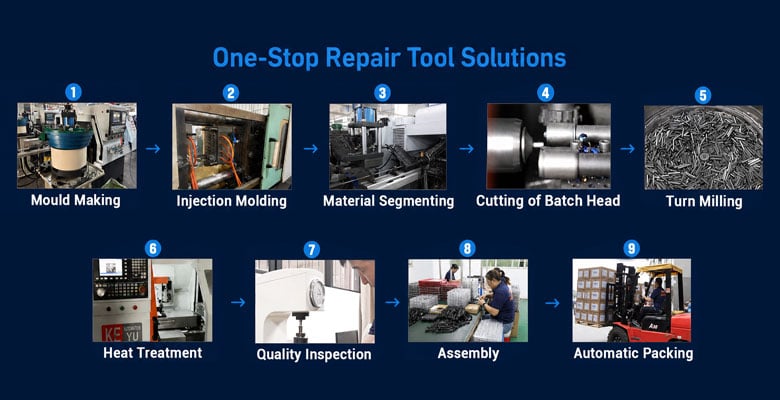
Confirm the actual bit material, hardness range, tip dimensions, handle construction, and relevant performance requirements.
Request samples and agree on measurable acceptance criteria before placing a large order.
Determine whether the supplier can support logo application, bit configuration, product colors, packaging design, and structural changes.
Minor branding changes and new product development may involve very different costs and lead times.
For reference, FIXBUD offers selected neutral screwdriver sets from 100 sets, while customized projects commonly start from 500–1,000 sets.
Typical production lead times are 15–20 days for neutral products and 35–40 days for customized products, depending on the project.
These figures should be confirmed for the specific product before ordering.
Documentation requirements depend on the product and destination market.
A manual screwdriver set and a rechargeable electric screwdriver do not necessarily have the same regulatory obligations.
For electric models, confirm applicable electrical, battery, environmental, and shipping documentation. For EU sales, determine which legislation applies before requesting CE-related conformity documents; CE marking is not universally required for all hand tools.
For retail products, verify packaging dimensions, barcodes, carton quantities, and display requirements.
For online sales, consider storage dimensions, packaging protection, defect-handling procedures, and the time required to replenish inventory.
These details affect the landed cost and reliability of the supply program, not just the initial quotation.
Key Takeaway:
Before placing a bulk order, verify product specifications, quality control, customization scope, MOQ, compliance requirements, and delivery planning—not just the quoted unit price.
A precision screwdriver set with correctly sized Phillips, Torx, and application-specific bits is usually the starting point. Pentalobe, Tri-point, or security bits may be required depending on the devices being serviced.
Not always. S2 is often selected for higher-hardness precision bits, while Cr-V offers a useful balance of durability and cost. Finished-bit geometry, heat treatment, and torque performance matter as much as the material name.
There is no ideal number. Start with the screws used in the target applications, then add accessories that make the set more practical. A smaller, well-selected kit can be preferable to a larger generic one.
Yes. Depending on the manufacturer and project, customization may include logos, bit combinations, handle colors, materials, carrying cases, and retail packaging. MOQ and development time vary with the scope.
Manual sets usually involve lower sourcing costs and simpler inventory management. Electric sets can offer greater product differentiation but require closer evaluation of torque, batteries, charging, and after-sales support.
Key Takeaway:
There is no single screwdriver set suitable for every market. Product configuration, material selection, and customization should follow the intended application and purchasing requirements.
Successful wholesale sourcing begins with the application, not the number of pieces in a screwdriver set.
The right selection combines suitable bit profiles, appropriate materials, a practical handle or drive mechanism, and packaging that fits the intended market.
For brands developing their own tool ranges, product configuration and manufacturing consistency matter just as much as unit price.
FIXBUD manufactures precision screwdriver sets, bits, and repair tools in China, supporting OEM/ODM development, private-label customization, and wholesale supply.
Develop Your Screwdriver Set with FIXBUD
Share your target market, preferred screwdriver type, bit requirements, or product concept. We can help evaluate the configuration, customization options, samples, and bulk production requirements.
Discuss Your Screwdriver Set Project → Hot News
2026-11-06
2026-11-05
2026-11-06
2026-11-05
2026-11-04
2026-11-04

FIXBUD manufactures precision screwdriver sets, bits and repair tools in China. OEM/ODM, private-label and bulk supply worldwide. Request a custom quote today.
Room 402, Building B, Getailong Zhigu, Bulong Road, Bantian Street, Longgang District, Shenzhen, Guangdong Province, China
Copyright © 2026 EWIN ENTERPRISE LTD. All rights reserved. Privacy Policy
 EN